
Childhood Play Is a Plan, Not a Pause
Malika Crutchfield wants a big family. She says it plainly, like it’s already settled. When asked why, she smiles: “So we can get together.” Then she adds she wants to be a veterinarian. “They help animals,” she explains. “You need a plan.”
In that moment, she’s not just dreaming—she’s deciding.
Malika is the daughter of Johnoson Crutchfield, a real estate investor and podcast host, and she brings a surprising level of clarity for someone her age. Her dream is wrapped in crayons, piano keys, and art projects. But it’s no less serious than any business plan.
It’s not just playtime—it’s preparation.
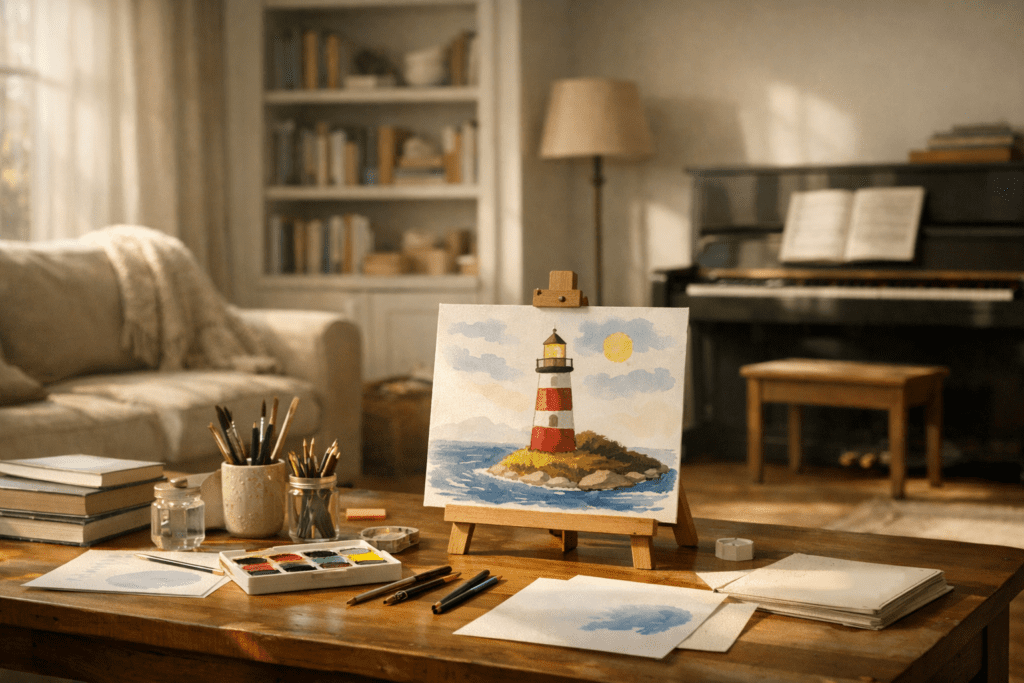
This episode proves the point that family matters and childhood dreams are built with the smallest choices, not the biggest speeches. When Malika paints a lighthouse or crafts a Valentine’s Day card, she’s practicing focus and care. When she pulls out The Fantastic Body, a book about health and anatomy, she’s learning how to understand life—not just how to live it.
The bigger lesson? Spare time isn’t neutral. It either helps you build the future or it drifts you further from it.
Here’s how to use ordinary moments to build an extraordinary foundation for your children:
Reframe play as training for purpose
Choose books that teach more than they distract
Let your kids explain their dreams out loud
Use art, music, and curiosity as confidence drills
Talk about family, money, and values early
Limit time on screens that offer nothing back
Give them a seat at the table, even if it’s your podcast mic
Later, we’ll see how Johnoson encourages Malika to think about partnerships, family finances, and what kind of life supports her dream. We’ll also explore how creativity—like singing or painting—becomes more than expression. It becomes execution.
When distractions creep in, from Netflix to TikTok, we’ll make the case for choosing books over algorithms.
Malika isn’t just playing vet. She’s starting now.
Big Families Start with Big Intentions
When Malika Crutchfield talks about wanting a big family, she does not hesitate. She says it as if it is already part of her life plan. Asked why, she answers simply: “So you can get together.” That answer carries weight because it reveals what she values most. Togetherness is not a side benefit. It is the goal.
For Malika, family is not an abstract idea. It is something you build on purpose. She associates family with showing up, sharing space, and staying connected across time. Even when she stumbles over words, the meaning is clear. Family reunions matter. Being present matters. Caring for one another matters.
Later, when asked why family matters to her, she gives an answer that cuts straight through the noise: “Because they care and help me.” There is no theory in that statement. It is lived experience. Family is where support shows up without being asked. Family is where help is normal, not transactional.
This is where many adults get it backward. We assume family stability happens automatically if we work hard enough. Malika’s answers suggest something else. It’s not about having more time later. It’s about making intentional choices now. Big families do not start with size. They start with values that are practiced daily.
That realization reframes everything. If family is the outcome you want, then decisions about time, habits, and priorities are already family decisions. The way evenings are spent. The way conversations happen. The way goals are spoken out loud. Those moments stack up.
Here is a simple way to translate that intention into action:
Talk about family as something you build, not something you inherit
Ask children what togetherness means to them
Create regular moments where everyone gathers with purpose
Treat family time as non-negotiable, not leftover
Model care and help as normal behavior
Reinforce that showing up matters more than being impressive
Malika’s clarity exposes a truth adults often avoid. Legacy is not a financial concept first. It is a relational one. Money may support a family, but intention creates it. When a child can articulate why family matters, it signals that the foundation is already forming.
Big families start long before there are many people in the room. They start when care, help, and togetherness are treated as skills worth practicing.
Don’t Just Play—Practice
Malika Crutchfield’s world is full of fun. But when you listen closely, you realize she’s doing more than just passing the time. Asked how she spends her day, she says, “I play and practice piano.” A moment later, she adds, “I sing sometimes.” These aren’t filler activities. They’re micro-decisions that sharpen her future focus—especially her dream of becoming a veterinarian.
“Do you do any arts or crafts?” she’s asked. “Yeah… I paint,” she answers, lifting up a small lighthouse she made. The structure is detailed, colorful, and steady. She found it, painted it, and saved it. That small moment of creativity holds more than glue and paint—it reflects attention to detail, patience, and care. She later shows off a handmade Valentine’s Day card, one of many she’s made. These aren’t just hobbies. They’re reps. They’re rhythm. They’re relationship-building with herself.
A few days before this episode was recorded, Malika had the chance to create something for someone else. It wasn’t a school assignment or holiday requirement. She simply decided to make a Valentine’s Day goodie bag and note—just because. The gesture surprised her father. He had kept her note tucked away on his desk. “Yours is right here,” he told her, holding it up proudly. It was a reminder that time invested in joy often circles back as love received. That moment—pure and unprompted—showed how play can become a practice in generosity.
To help children like Malika turn play into purpose, try these simple steps:
Ask what they’re excited to do when they’re not “on the clock”
Look for patterns in their favorite activities
Introduce materials that stretch those interests further
Build consistency with light, repeatable routines
Pair fun with feedback—talk about how it made them feel
Let their projects live in the open, not hidden in a drawer
Name their actions as strengths: “You notice details,” “You keep going,” “You care”
The truth is, practice doesn’t need a piano bench or a scoreboard. It can happen with glitter, paintbrushes, songs, or handmade cards. When we frame those moments as skill-building instead of time-killing, we show kids what’s possible—and we learn a lot about what matters most to them.
Every Hobby Teaches Something
Malika held up a small lighthouse, painted in reds and blues, the brushstrokes uneven but determined. She had found the model herself and spent an afternoon bringing it to life. No one asked her to do it. She didn’t do it for a grade. She did it because it was fun. Nearby, a hand-crafted Valentine’s note sat inside a small bag of candy—a project she made for her dad, just because. He had accidentally grabbed her brother’s first, but hers was still there, tucked safely in reach. Her face lit up when he showed it to her on camera.
These aren’t just cute moments. They’re early signs of ownership. When a child creates something from scratch, gives it as a gift, and then sees it treated with care, they’re learning something powerful: their effort matters. Their creativity leaves a mark. What starts as arts and crafts becomes proof of agency.
The punchline is simple: hobbies are rehearsals for responsibility.
Every paintbrush, piano key, and paper heart shapes how a child sees themselves and the world. Parents often miss the pattern. But it’s there. What kids return to again and again—especially when no one is watching—reveals what they’re ready to master.
Here’s how to turn casual hobbies into conscious development:
Ask why they love the thing they keep doing
Show them that finished matters more than perfect
Frame their project as valuable, not disposable
Watch for signs of patience, focus, or attention to detail
Let their creations take up visible space in your shared world
Malika said, “I made this for Valentine’s Day,” and it was more than a note. It was a signal. A self-led decision to use time and talent toward something kind. That choice didn’t just build a habit—it built her sense of identity. She isn’t just learning how to make things. She’s learning she can.
Prepare Kids to Choose Partners and Plans
Johnoson Crutchfield doesn’t just ask his daughter what she wants to be when she grows up. He pushes her to think about what it takes to get there. When Malika says she wants to be a veterinarian, he affirms it—but adds a layer: “You need a plan.” Then, without skipping a beat, he plants a seed that most adults hesitate to say out loud. “Are you going to make sure you meet the right husband that’s respectful and loving, right? And make sure that he can help you grow that big family you want and take care of it?”
It might sound like too much, too soon. It’s not. It’s intentional. It’s honest. And it’s protective.
Malika dreams of a big family. That dream carries financial, emotional, and practical implications. When Johnoson reminds her, “You have to have some money to take care of that big family,” he’s not discouraging her. He’s giving her tools.
This conversation isn’t just about parenting. It’s about planting frameworks early so kids make clearer decisions later.
Here are six rules for preparing kids to choose wisely:
Talk about dreams in terms of steps, not just outcomes
Connect personal goals to practical realities (money, time, effort)
Introduce the idea that partnership is part of life planning
Avoid fairy-tale framing—ground hopes in character, not charm
Reinforce that love and respect go hand in hand with stability
Model those values visibly in your own relationships
When children learn to link dreams with real-world factors, they don’t get discouraged—they get prepared. They stop waiting for life to happen and start shaping it with eyes open and heart intact.
Screens Steal, Books Build
Malika didn’t bring a toy to the conversation. She brought a book. Not just any book—The Fantastic Body. She placed it in front of the camera and said it was heavy “because it has a lot of information in it.” Then she flipped it open and explained, “It’s about staying healthy… what makes you sleep, how your body works.” No one told her to prepare. She just did.
That moment could have looked very different. A phone. A tablet. A scroll through something quick and forgettable. But instead, Malika made a choice to keep learning, even during downtime.
This is where so many dreams stall: in the algorithm. In the lull. In the endless scroll.
The warning signs aren’t always dramatic. They’re subtle. An hour lost to Netflix. A kid who once loved reading now glued to TikTok. A mind ready to build something, left idle.
Here are the truths most parents avoid saying out loud:
Digital platforms are designed to consume your child’s time, not grow it
Fun is not neutral. It can lead them forward or leave them stuck
A book left on the table says more than a phone in their hand
Curiosity fades if it’s never stretched
Kids rarely choose growth unless it’s modeled first
Malika’s choice wasn’t random. It was shaped by what she sees at home, what’s affirmed, and what’s expected. In a world that tells kids to binge and swipe, showing them how to sit still and wonder is a form of rebellion—and a gift that keeps compounding.
Your Kids Are Watching—And Remembering
Malika Crutchfield wants to be a veterinarian and have a big family. At first, it sounds like the kind of answer you’d expect from a child with a wild imagination. But she’s not just dreaming. She’s already practicing. From painting lighthouses to reading The Fantastic Body, Malika’s world is filled with intentional play—and every choice is shaping her future.
What’s more, her father is helping her make the connection between dreams and decisions. When he tells her, “You have to have some money to take care of that big family,” it’s not about pressure. It’s about preparation. That moment reframes what many adults avoid: our kids won’t stumble into a good life. They’ll build one based on what we teach and what we tolerate.
“If you remember one thing, remember this:”
Kids become what they practice. And they practice what we model.
Your child’s hobbies are blueprints. Their questions are early drafts of life plans. Their free time is more than a break—it’s where identity is formed.
So here’s a next step: Tonight, ask your child what they would do if they could pick any job in the world. Then ask, “What could we do tomorrow that gets you one inch closer?”
The conversation might be short. The answer might be silly.
But you’re showing them that dreams deserve airtime—and action.
About Malika Crutchfield: Future Veterinarian and Family Dreamer
Malika Crutchfield is a thoughtful and creative child who dreams of becoming a veterinarian and building a large, connected family. Her days are filled with play, piano, singing, arts and crafts, and reading books that fuel her curiosity—like The Fantastic Body, a guide to how the body works and stays healthy. She believes that family matters because they care and help, and she brings that same spirit to her daily life.
Malika uses her spare time not just for fun but for purpose—painting lighthouses, crafting Valentine’s notes, and learning through hands-on exploration. She’s already making the connection between what she loves and how to grow it into something meaningful.
Hosted a featured conversation on the Grab the Map podcast
Practices goal-setting, creativity, and self-discipline at a young age
Sees learning and family as central to building a strong future
Connected with Johnoson Crutchfield
Stay connected, keep learning, and grow your network by following Johnoson across all platforms:
Facebook: https://www.facebook.com/theycallmejc/
Instagram: https://www.instagram.com/grabthemap/
LinkedIn: https://www.linkedin.com/in/grabthemap/